Saturday, August 20, 2011

Haven Homes


According to their website "...Haven Homes is the Real Estate subsidiary of Haven Global Resources Ltd, a firm registered as a limited liability company in Nigeria. Haven Homes is focused on developing unique, luxury homes that are based on western comforts and lifestyles.
We specialize in creating homes that model after the rich, luxurious, western aristocratic homes previously only seen in movies.
Our focus is to provide our customers with ultra luxurious homes that offer unique and individual layouts, abundant natural light, mezzanine levels, galleries, bridges, atriums and sometimes, roof terraces..."

Nigerian Bottle House


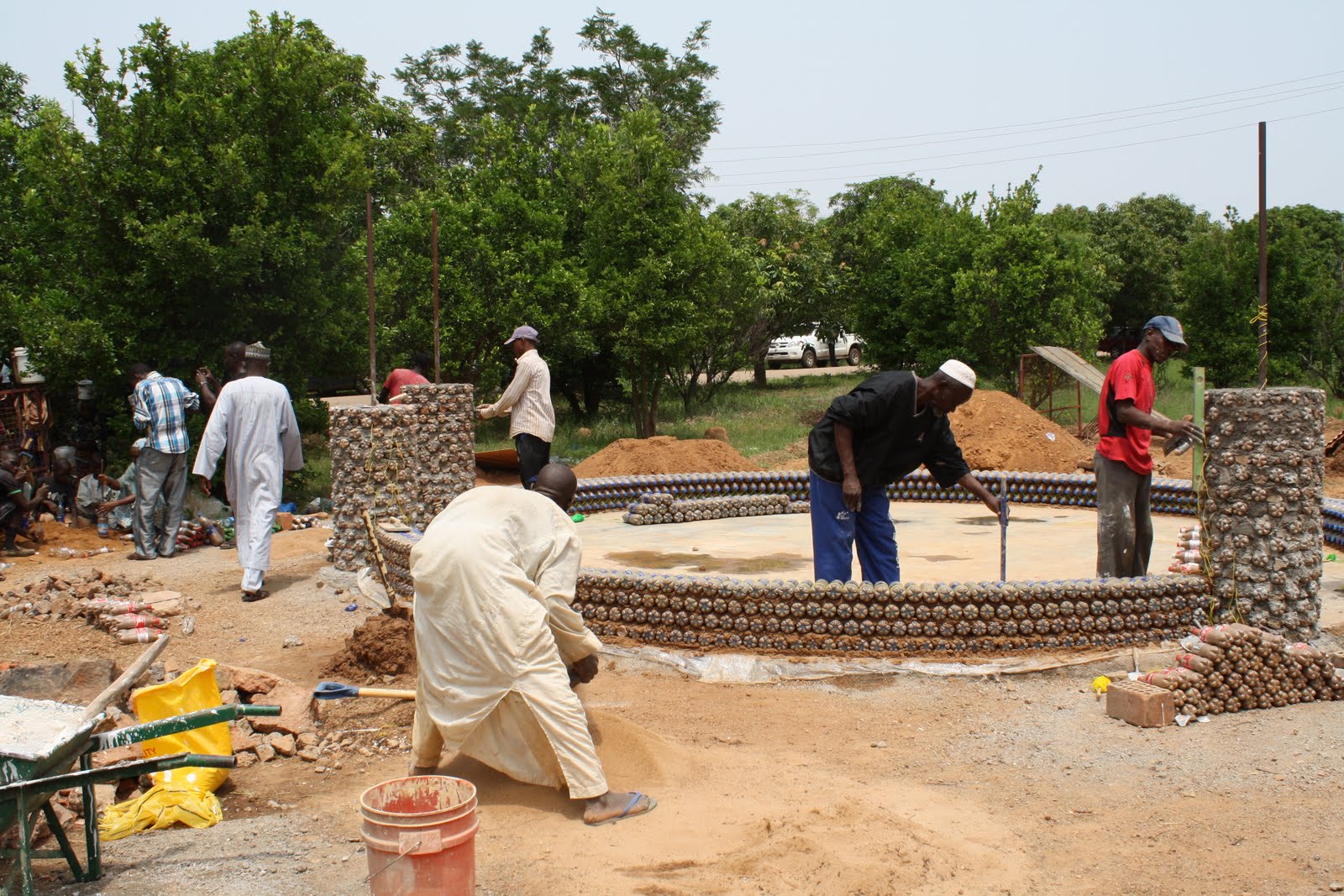
Energy Refuge writes about using PET plastic bottles that are an environmental nuisance as the one of the main building components for sustainable housing.

A lot of us are also working to see how we can recycle used discarded water sachet bags(pure water) into building products.

Photos courtesy of Energy Refuge website

Saturday, March 26, 2011

Shrinkfish


according to their website "...Shrinkfish® is a newly incorporated Media Studios in Abuja, Nigeria with a special focus on animation and dynamic content as related to Entertainment, Corporate Identity, Branding, Advertisement solutions, Flash content, Internet and Multimedia presentations. It is our utmost intention to make a change in the animation and media industry in Africa starting from Nigeria..."

"...Apart from producing own content in 2D Animation, we offer Services in both 2D as well as 3D Animation under the supervision and management of a top African and European team whose experiences in film, television, Internet and print media go back to over 15 years..."

Saturday, July 10, 2010

Syrian Beehive Houses


Treehugger writes about Syrian Beehive houses that are "....Designed for the desert climate, the beehive homes keep the heat out in a few ways. Their thick mud brick walls trap in the cool and keep the sun out as well (beehive homes have very few, if any, windows). The high domes of the beehive houses also collect the hot air, moving it away from the residents sleeping at the bottom of the house..."

Photos courtesy of Treehugger

Yazd's wind-catchers


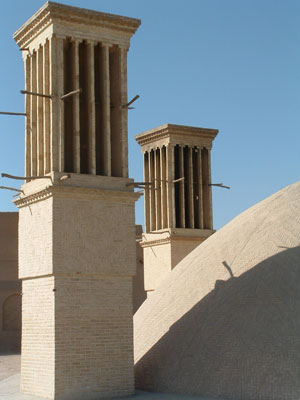
Makezine writes about traditional wind-catchers that are built on the top of buildings in the city of Yazd in Iran.

It says "...When I visited the 3000-year-old city of Yazd, Iran, the old school technology I was most fascinated by is the windcatcher. Seen atop many a building in this arid city with an annual rainfall of 2.4 inches and summer temps frequently pushing 104°F, these towers are the predecessors to the swamp cooler. Basically, the wind shafts on the rooftops have directional ports, and only the one facing away from the incoming wind is left open. The wind gets sucked in and pushed down over water below, and the cooled air is circulated through the house. In the ancient homes I saw, the room at the bottom of the wind shaft had a little pool of water and the sides of the room were often built-in brick benches covered with carpet, where the dwellers would spend the hottest part of the day..."

Photos courtesy of Makezine

Wednesday, June 30, 2010

Lagos Keys


Lagos Keys is a proposed development by Pinnacle Point Group. According to there website "...Pinnacle Point Lagos Keys will create the ultimate luxurious lifestyle with opulent residential homes set on spacious 3000m² private erven, with panoramic vistas across the lush golf course and landscaped gardens. Offering picturesque serenity, breathtaking views and timeless elegance, these freestanding, sumptuous mansions and palatial villas will be designed in a selection of styles including Classical, Mediterranean and Colonial..."

Wednesday, December 16, 2009

Shenzhen and Hong Kong Bi-City Biennale of Urbanism\Architecture.


FastCompany talks about the "...Hong Kong's Business of Design Week and the dual openings of the Shenzhen and Hong Kong (or Hong Kong and Shenzhen, depending who you ask) Bi-City Biennale of Urbanism\Architecture. But the short answer is, duh--if you haven't heard, China is where the money is. (Well, not always, but more on that later..."

Photo courtesy of Fast Company Website.

Friday, October 30, 2009

Afritecture


The Afritecture website says "..The influence of Africa in modern art and music is well documented. From the the works of Pablo Picasso to the sounds of Rhythm and Blues, elements of African styles are globally acknowledged. The African accent on today’s built environment, however, remains less celebrated.

Unlike the term ‘Western Architecture’, which conjures up images ranging from Greek Temples to Post Modern high rises, African architecture tends to be viewed through a very narrow prism. A hut is usually what comes to mind. Rarely is African architecture observed with reference to antiquity or to exemplary contemporary architecture.

This website aims to change that.

Over the centuries, cultures within continental Africa have developed and used numerous design principles in the design and construction of their surroundings. Out of necessity, availability, and creativity, these aesthetics - which are as varied as the continent’s vast cultural diversity, and further modified as they have passed through the screens of Eastern and Western cultures - are still prevalant within today’s urban context not only in Africa, but throughout the world.

This website , a platform through which the influence of this design vernacular in modern day Architecture, Landscape Architecture and Interior Design is showcased, is less about architecture in Africa, but more Africa in architecture. We also aim to be an exploration of this vernacular, within the context of the past, the local, and the present, with the hope of inspiring further investigation and admiration..."

Thursday, August 27, 2009

Compressed Earth Block Prototype


Open Source Ecology writes about the Compressed Earth Block Making machine that can me fabricated by small communities to enable them produce their own cheap sustainable eco-friendly blocks.

Wednesday, August 05, 2009

African Digital Art


African Digital Art Blog "...is an online collective, a creative space, where digital artist, enthusiasts and professionals can seek inspiration, showcase their artistry and connect with emerging artists..."

It recently featured the work of of Amina Abdala an Architectural Designer based in Tokyo with more than 10 years experience in architecture, 3D computer graphic design, project management and production management.

Thursday, May 28, 2009

Bio Degradable Insulation


A cutting edge Bio degradable Insulation for Construction and other purposes has appeared in the market.Their website says "...Greensulate™ is an affordable, environmentally-friendly drop-in replacement for the expanded polystyrene used in cavity walls and structural insulating panels.

Greensulate™ is produced from natural byproducts, such as buckwheat hulls and cotton burrs, without heat or light input. With superior strength and comparable insulating properties, Greensulate™ insulation helps you reduce the amount of energy used to build your home, and increases your efficiency over the long haul..."

Thursday, April 16, 2009

Constructs LLC


According to their website "...Constructs LLC is a company that synergizes architecture, urban planning, landscaping, and building technology into a single unit geared towards bringing modern architecture and building techniques to Africa.

Monday, December 01, 2008

Sustainable Human Settlements Consult Limited


According to their website "...SHSC Sustainable Human Settlements Consult Limited, founded in Lagos, Nigeria in 1995 as a partnership of Mustapha Zubairu (Architect/Planner and urban development and management expert), and Stella Zubairu (Architect and Facilities Management Expert), has continued to grow in organization resources and experience to meet the challenges of increasingly complex projects..."

"...We continue to operate as a general practice and have provided a full range of architectural and project coordination and management services, environmental management, urban development and management, urban governance related projects. We maintain long-standing relationships with consultants, construction industry and product supply interests. Since our inception we have sought public and private project assignments emphasizing changes that result in distinctive lasting and serviceable design..."

Images courtesy of SHSC

Wednesday, November 19, 2008

Abodes for the Coastal Inhabitants of West Africa


While accompanying my mum to one of the markets in Enugu about 4 months ago, we went the section that sells dry shrimps(aka crayfish). While she was buying some crayfish she told me that most of the crayfish in the market now comes from Bakassi area of Nigeria area now. This is because the catches which mainly came from the central Delta is no longer in demand because a lot of their crayfish is tainted by oil and fuel slicks from the leaking crude oil pipes in the creeks. This rather unfortunate calamity has destroyed the means of livelihood of a lot of fishing villages in the Niger Delta.

I believe that a lot of the fishing communities do have to re-settled to land based housing schemes because we can design modern housing schemes that borrow a lot of ideas from their traditional architecture which could end up serving them better.

Most of the fishing communities of West Africa tend to live in houses built on stilts or poles embedded in the river or sea-bed because of constantly changing daily or seasonal level of the river and sea water around them.

By incorporating rain collection devices on the roof as well as portable solar distillation equipment will alleviated a lot of problems the inhabitants have with access to clean drinking water.

The intended source of power supply will be from Photovoltaic and wind generated power.

Fish, crayfish and seafood drying can also be carried out on the retractable canopy of the proposed building prototype. Collection tanks for sewage and Grey water incorporated with algae will gradually break down the waste which could be used in the suspended vegetable gardens attached to the abode.

The concrete substructure will be held up by friction piles driven to the shallow seabed. The superstructure will be a light wooden/aluminum/polyethylene building bolted to the concrete base that could be easily adapted to the family size of the inhabitants.

With a lot of the Nigerian coastal communities facing problems from poverty, destruction of their ecosystems, lack of clean drinking water I believe that we can contribute design,construction and technological ideas that could be used to develop modern housing schemes. These design could be influenced by Ijaw,Kalabari, Ogoni, Urobo, Iteskiri traditional architecture but still maintain the functionality, durability of an abode built on top of water.

Friday, October 24, 2008

Master Holdings


Their website says "...Master Holdings (Nig) Ltd is a Civil Engineering & Buildings Construction company that is wholly indigenous with some expartriate engineers in its employ.

Since the company's birth in 1984 it has maintained a policy of delivering projects ahead of schedule with a special flare for thoroughness, efficiency, perfection and durability.

Initially the company concentrated on buildings construction, but branched into the roads and bridges construction market in 1994. Since then, Master Holdings has become synonymous with excellence in Civil Engineering Construction, especially roads, bridges and erosion control.

Master Holdings (Nig) Ltd was founded by Mr Kanayo G Nwandu, a 1978 Quantity Surveying Bsc (London) (Hons) graduate. He had his very rich experience in Civil Engineering and Buildings Construction in DANSEL, a highly reputable Civil Engineering and Buildings Construction Company, whose existence spanned from the 1950s to the 1980s. It was while having his tutelage in DANSEL, where he rose to be the Managing Director, that his ambition to form a very formidable, efficiant, organised and performing Road Construction Company was nurtured.

And so, in 1984, Master Holdings (Nig) Ltd was incorporated with Mr Kanayo G Nwandu as its Chairman/Managing Director. As a holding company, it is also involved in Real Estate, dry Cleaning Services, Travel Agency Services, Quarry, etc. Bus as at now, the Company's main business trust is Civil Engineering and Buildings Construction, with a non-pariel expertise in..."

Logo courtesy of Master Holdings (Nig) website

Tuesday, October 21, 2008

Essential Interiors


Their website says that " ...Essential Interiors was established over 8 years ago, offering a complete interior design, supply, project co-ordination and installation service. Customer satisfaction is our watchword and over the years, we have built up an impressive clientele base, both local and international. Our hard earned reputation is due largely to our well trained professional staff and management whose varied experience of the Nigerian market coupled with a fine blend of innovative ideas and knowledge of the very latest trends in the industry make Essential Interiors one of the leading Interior Design consultancy firms in Nigeria...".

Its Management team is headed by Titi Ogufere "...who earned her qualification in Interior Design in Ireland. She is vastly experienced and is on the board of the Interior Designers Association of Nigeria (IDAN) and only recently started Essential Interiors Magazine based in Nigeria to promote Interior Design decoration and Garden Design..."

Phtotos courtesy of Essential Interiors

Friday, October 17, 2008

Philippine Earthbag Construction


The Green Home Building writes about an "... Earthbag Construction System is proving to be fast, inexpensive, sturdy and environmentally friendly. It also does not require an army of professionals to build – just eager, willing and able people of both sexes and all ages.

A building technology originating from the Middle East, developed by an Iranian-American, is generating a buzz in the Philippines as an environmentally benign solution to a pressing shortage of shelter and school buildings. Nader Khalili, the awarded California-based architect/author and teacher of Iranian-American earth architecture, says his ceramic house and earth architecture techniques are also a quick, inexpensive way to build mass shelters for calamity victims.

But it was a young Filipino entrepreneur, Illac Diaz, who found Khalili’s architectural innovations suitable for the Philippines, where, even without natural and man-made disasters, housing and classroom shortages are acute.Mentored by Khalili himself, Diaz is showing that the Earthbag Construction System is proving to be fast, inexpensive, sturdy and environmentally friendly. It also does not require an army of professionals to build – just eager, willing and able people of both sexes and all ages.

Diaz is the Executive Director of My Shelter Foundation, which looks for ‘uncommon solutions for common problems’. He pointed out that the old Filipino construction technologies, using wood, cane, stones and other forest products, are no longer suitable and practical given the country’s severe deforestation. Concrete has also been an unrealistic alternative for people without adequate means to have their homes – or any other building – air-conditioned, due to its heat retaining properties. Even electric fans use considerable energy, generated through imported, costly and irreplaceable fossil fuel.


Diaz’s technology, however, which is an adaptation of Khalili’s Earthbag ceramic house method, uses material found right under people’s feet – soil. Other materials used are straw sacks and barbed wire for structural support, water pipes, oil drums for windows, and a little cement.Diaz first put the construction innovation on display by building a model house made of ‘mud’ in Escalante, Negros Occidental, in the central Philippines in honour of a recently deceased aunt who had lived there. Then, realising many public school children in the Philippines, particularly those farthest from the capital city of Manila, barely had roofs over their heads as they attended classes, Diaz decided to launch a school building campaign that he hoped would be adopted elsewhere.


Siargao Island of Surigao del Norte, in eastern Mindanao province, sits on the edge of the Pacific Ocean. Though it has become a favourite destination for dedicated surfers from around the world, Siargao, like many other places in the Philippines, badly needed buildings that would at least provide adequate protection from the elements. In many areas of Mindanao, with its serious environmental, peace and order problems, thousands of Filipino students receive lessons in makeshift classrooms. Often they are in an open field with only a tree’s sprawling branches to offer some kind of cover.

Diaz noted that the current design for Philippine school buildings was both uncomfortable for students and energy inefficient. Classrooms were hot and dimly lit so electric light bulbs were needed. The discomfort of the classroom may have been contributing to the high student dropout rates, he thought.

With domed or arched roofs, whose weights are supported by the walls, Diaz’s school buildings – and houses – have no pillars. They also do not use hollow blocks. Steel drums are employed to shape and provide the opening for rounded windows and pipes are strategically placed to let air in and out to cool the structures. A little cement is used in some places just to ‘glue’ things together.

The first three-room school that My Shelter Foundation built in Siargao, in collaboration with the Abakada Foundation (a Filipino non-government organisation focusing on the provision of educational facilities in rural areas) has cost about 150 000 Pesos, but Diaz expects the price to fall even further as he and his partners become more experienced in the use of the technology. The project took less than a month to complete.

Diaz, who has patented the construction technology, said conventional building techniques ‘did not take into account nature’. He said they destroyed the environment, polluted the water, and required a lot of energy for cooling because ‘metal sheet roofing generates a lot of heat’, requiring air-conditioners or electric fans. As the main component of Diaz’s construction – soil – is free and readily available, there is also less need for imported materials.


‘Maybe the Western building techniques are not (appropriate) for developing countries,’ Diaz said. ‘Earthbag’ structures are also fireproof. Diaz said fire,
in fact, ‘cooked the soil and turned it into brick’, strengthening the material in much the same way heat makes pottery stronger. Hence, Khalili calls his handiwork ‘ceramic housing’.

Supposedly better able to withstand typhoons and earthquakes too, Diaz said the structures could last 50 years or more, and are then recyclable. They can remain where they are so dust can return to dust, even without help from humans, he said..."

Photos courtesy of The Green Home Building website

Wednesday, September 10, 2008

ArchitectAfrica


Architect Africa is a news and information network for the African Built Environment according to their website. Their goals include "...

1. To be the best African Built Environment News & Information Network on the Internet.
2. To provide full and free access to our systems to all visitors and users.
3. To publish from the fastest and most reliable servers and delivery network available.

Saturday, September 06, 2008

Palmyra House


Inhabitat says "...Pitched as having over 800 uses, the Palmyra Palm (or Borassus) is recognized as one of the most important trees in Cambodia and India. Earlier this year, Indian born architect Bijoy Jain of Studio Mumbai illustrated the ecological potential of the palm when he designed and built the beautiful Palmyra House. Constructed entirely from locally sourced and sustainably harvested palmyra, the home is sited on a working coconut plantation in the East Indian coastal town of Alibaug..."

Photos courtesy of inhabitat

Monday, August 25, 2008

Design Decisions


Their website says "...Design Decisions is an interior design firm established in California in 1990. Our Lagos office opened in 1993 and has grown to be recognized as the leading interior design consultants in Nigeria. In 2007, we expanded our services to South Africa.

We are influenced by the grand scale and fantasy of Californian style, the business savvy required to do business in Nigeria, and the creative blend of African motifs in South African interiors. These global influences reflect in our projects and give them a unique approach to making critical design decisions.

We focus on commercial, residential and hospitality design. We are a multi-disciplinary practice, incorporating architectural and interior design, as well as project management services for developments such as apartments, luxury homes and corporate headquarters..."

Photos courtesy of Design Decisions