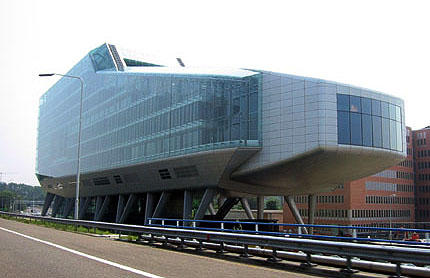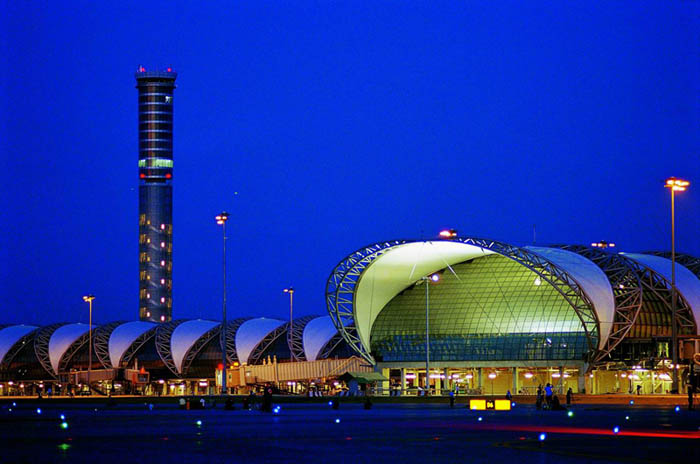
The recently opened Suvarnabhumi International airport Thailand and the Madrid Barajas Terminal 4 International Airport in Spain are some of the few brand new airports that are leading the way in Eco-friendly and Sustainable Airport Facilities in the world today.
The Suvarnabhumi International is one of the first airports of its size that uses water cooled down by heat exchangers at a cogeneration plant as a coolant for its airconditioning system.
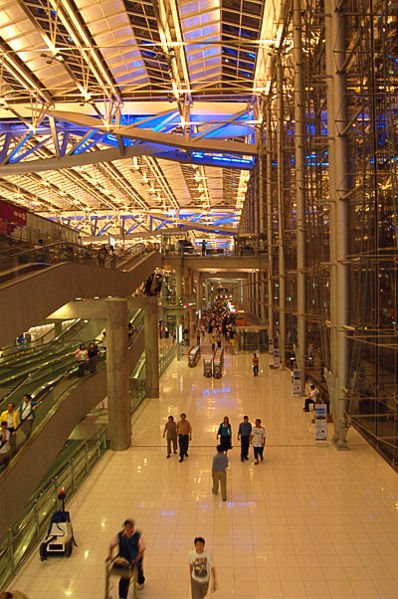
This cost saving technology seems to be a better alternative for the airport,rather than the norm of using expensive standard heavy duty cryogenic chillers.
The simplicity of the Suvarnabhumi Airport cooling system technology seems to be similar to the water cooled Chilled Beam technology.
Perhaps the soon to be completed new Ikeja Domestic terminal should utilize such affordable technology as the chosen method of cooling down the airport in the future.
The Madrid Barajas Terminal 4 International Airports bamboo ceiling feature and extensive use of natural lighting I think also makes it Eco-friendly-Sustainable candidate. The bamboo ceiling feature that gives the ceiling this "Sine-wave" effect .


According to the technical specifications on the Estudio Lamela on
of the project architect's website "... The ceiling finish to main roof is bamboo planks 100mm wide with 50mm gap (varies with geometry).
Bamboo treated to Spanish M1 standard for fire protection. Ceiling of lower passenger areas is made up of circular lighting disks (woks)
1,500mm diameter at 1,800mm centres suspended from galvanised steel frame..."
Bamboo being a fast growing flexible and strong natural material has been presented in a very amazing way as shown in the photos, you could not even tell its ordinary bamboo.
Photos courtesy of Estudio Lamela,Wikipedia,Shutter Photography